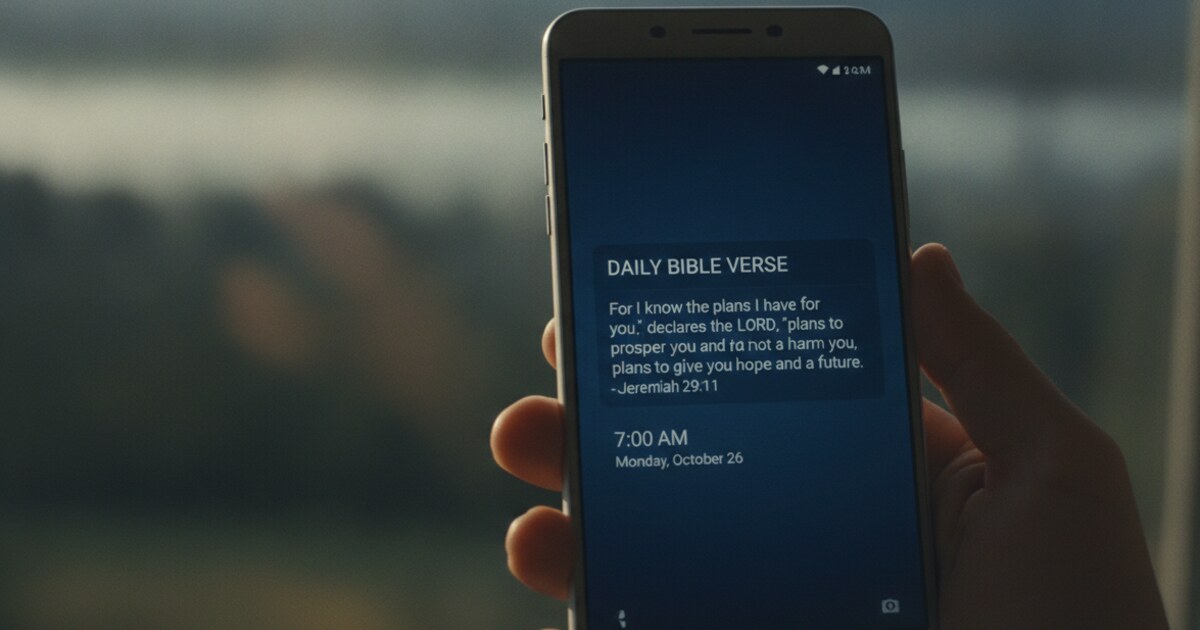

Want a verse on every screen? Psalmo is free.
Most Bible apps let you read. A growing handful let you ask. Type “What does Romans 8:28 actually mean?” or “Find me a verse for what I’m dealing with today” and get a real, contextual answer in seconds. That kind of access changes how people spend time with scripture, and the apps that offer it vary a lot in how well they actually pull it off.
The AI Bible chat app category grew from two or three notable options in 2022 to more than seven that now claim some form of AI-powered scripture interaction. Some are genuinely conversational. Others have AI-labeled features bolted onto reading plans that do little more than surface a verse highlight.
We tested five of the most-downloaded options. Here’s what each one actually does, what it costs, and which one is worth your time.
The best AI Bible chat app for most people is Psalmo. Its premium tier unlocks “Ask anything about the Bible,” plain-language verse explanations, and situation-based scripture search, available on both iOS and Android. If you want academic depth over conversation, Olive Tree goes deeper with commentaries, but it has no chat interface.
The four criteria we used: quality of AI answers to open-ended theological questions, breadth of topics covered, platform availability, and what the app does for your daily scripture practice outside the chat window.
What Makes a Good AI Bible Chat App
AI Bible chat apps divide into two types: apps where scripture is the primary product, and apps where AI is a feature layer added to a reading plan or widget. The first type builds its AI around theological context, translation accuracy, and denominational nuance. The second type often runs a general language model with scripture prompts bolted on. General tools like ChatGPT and Gemini can discuss the Bible, but they have no theological guardrails and are as likely to blend traditions or misattribute a paraphrase as they are to give a grounded answer. Pew Research 2024 found that 45% of US adults pray daily and 62% own a smartphone, putting roughly 280 million people at the intersection of active faith practice and mobile-first behavior. The AI Bible app category grew to match: from 2-3 notable apps in 2022 to more than 7 by 2026, spanning free widget tools up to $12.99/month academic study suites, each taking a different approach to what “AI Bible chat” actually means.
When testing, the questions that separated apps most clearly were open-ended theological ones (“What’s the biblical case for grace over law?”) rather than simple verse lookups. Most apps handle “look up John 3:16” fine. The ones worth recommending handle the harder questions too.
The 5 Best AI Bible Chat Apps
1. Psalmo: Best Overall
Psalmo launched as a Bible widget app, and it still ships the best home-screen and lock-screen widgets in the category. What puts it at the top of this list is that the AI features aren’t window dressing on a reading plan. They’re five distinct modes, each built for a specific use case.
What the AI does:
- “Ask anything about the Bible”: open Q&A on any theological question
- “Explain a Bible verse”: plain-language commentary on any verse you type in
- “Find a verse for my situation”: surfaces relevant scripture based on what you’re carrying
- “Write a prayer for me”: generates a short personal prayer (more on this in our full AI prayer app comparison)
- “Reflect on my week”: journaling prompts tied to scripture
All five AI features require a premium subscription. The daily verse widget, scripture category selection (15+ categories including Faith, Peace, Strength, Forgiveness), and the app-blocking gate are part of the free tier. The gate pauses Instagram, TikTok, X, YouTube, or whichever apps you pick until today’s verse is read.
That combination (AI chat bundled with a scripture gate and home-screen widgets) isn’t available anywhere else in a single cross-platform app.
On privacy: all conversations stay on-device or in the user’s account. No conversation data goes to a third party without your knowledge.
The honest caveats: translations are limited to KJV and World English Bible. No NIV, ESV, or NLT. If you’re attached to those translations, that’s a real tradeoff.
Like any AI Bible tool, the answers are a starting point. Complex doctrinal questions deserve follow-up with a commentary or a pastor.
Best for: people who want AI Bible chat bundled with daily scripture habits and screen-time accountability. Cost: free tier (widget + gate); premium required for AI features. Platforms: iOS + Android.
2. YouVersion: Largest Library, Limited Chat
YouVersion is the most-installed Bible app on the planet: 700M+ downloads, more than 2,000 Bible versions across 1,400+ languages. If library size matters, nothing else comes close.
In 2024, YouVersion added AI-powered “Verse Insights” that pull commentary context and cross-references for any verse. It’s useful. What it isn’t is a conversational interface. Type “What’s the theological difference between grace and mercy?” and you’ll get verse suggestions and curated library content, not a fleshed-out theological answer.
YouVersion’s AI surfaces content from its existing library rather than generating answers. That works well for read-through plans and verse-by-verse study. It hits a ceiling fast for open-ended theological questions.
For most Christians, YouVersion is a strong daily reading companion. If you want genuine AI chat on top of that, you’ll need to pair it with another app.
Best for: readers who want the largest Bible library and structured reading plans. Cost: free, with premium content available. Platforms: iOS + Android.
3. Glorify: Devotional AI, Lighter on Q&A
Glorify positions itself as a daily faith companion: morning and evening devotionals, prayer prompts, and a growing library of guided content. Since 2024, it’s added AI-generated elements that personalize devotionals and prayer suggestions based on how you’re feeling.
It’s a personalization layer, not a chat interface. You can’t type a theological question and expect a breakdown. Where Glorify works well is using AI to surface the right devotional content for your current mood or season, which is useful if a structured daily rhythm is the main goal.
Premium houses most of the AI personalization features. The free tier gives limited access to the devotional library. If you’ve read our roundup of apps that write prayers, Glorify came up there too, with a similar verdict: strong for devotional structure, limited for open Q&A.
Best for: people who want AI to personalize a daily devotional routine, not to answer theological questions. Cost: free trial available; premium ~$9.99/month. Platforms: iOS + Android.
4. Hallow: Premium Audio, No Generative Chat
Hallow is a well-funded Catholic prayer and meditation app with a large content library: guided prayers, rosaries, meditations, and sleep content narrated by real voices, including recognizable Catholic figures. Consistently high App Store ratings, over a million downloads.
What Hallow doesn’t have is generative AI for Bible questions. The content is curated and pre-recorded, not generated. There’s no Q&A interface, no verse explainer tool, and no open-ended theological question feature.
Hallow belongs on this list because it shows up regularly in searches for AI Bible apps, and the distinction is worth making explicit: it’s a content-delivery app, not a conversational AI tool. If you want Catholic devotional audio, it’s excellent. If you want to ask questions about scripture, it’s the wrong fit.
Best for: Catholic users who want a rich guided prayer and meditation library. Cost: free trial, then ~$12.99/month. Platforms: iOS + Android.
5. Olive Tree: Deep Notes, No AI Dialogue
Olive Tree is built for serious study. Hebrew and Greek original texts, 300+ Bible translations, commentary libraries from Matthew Henry and John Calvin, and a cross-reference system that holds up for genuine exegesis.
No AI chat. No Q&A interface. The study depth here comes from curated human scholarship, not language models, and that’s a deliberate choice serious students tend to appreciate. You’re reading actual commentary, not AI-generated interpretation.
Most of the resource library is paid: individual commentaries range from $9.99 to $49.99. The base app is free.
Olive Tree is the strongest pick for academic tools. If you want to ask an open-ended question and get an instant answer, it’s the wrong tool for that job.
Best for: seminary students and serious Bible scholars who want reference-depth tools. Cost: base app free; resource library paid separately. Platforms: iOS + Android + macOS + Windows.
How to Choose an AI Bible Chat App
The right choice depends on what “AI Bible chat” means to you:
| If you want… | Choose |
|---|---|
| Open-ended Q&A + daily widget + screen-time gate | Psalmo |
| The largest Bible library + structured reading plans | YouVersion |
| AI-personalized daily devotionals | Glorify |
| Guided Catholic prayer and meditation audio | Hallow |
| Academic commentary and original language tools | Olive Tree |
One practical note: don’t rely on general AI tools like ChatGPT or Gemini as your primary Bible chat app. They can discuss theology, but they blend Catholic, Protestant, and Orthodox positions in a single answer without marking the distinction. They’ll also misattribute popular paraphrases (“God helps those who help themselves” isn’t in the Bible) as though they’re scripture. Faith-specific apps build that context in. General AI doesn’t.
For screen-time accountability paired with AI scripture access, the best Christian app blocker guide covers that category in detail. The lock-apps and AI Bible chat categories overlap more than you’d expect.
Frequently Asked Questions
What is an AI Bible chat app?
An AI Bible chat app lets you ask open-ended questions about scripture and get generated, contextual answers: verse explanations, theological Q&A, or a passage matched to your situation. The best ones ground their AI in a specific translation and theological tradition rather than a general-purpose language model with no faith context.
Is Psalmo’s AI Bible chat free?
The AI features in Psalmo (Ask anything about the Bible, Explain a verse, Find a verse for my situation) require a premium subscription. The daily verse widget, scripture category selection, and app-blocking gate are part of the free tier. A 7-day free trial on the annual plan lets you test the AI before committing.
Can I use ChatGPT or Gemini as a Bible chat app?
You can, but with real caveats. General AI tools can explain verses and answer theological questions, but they have no denominational guardrails and blend Catholic, Protestant, and Orthodox perspectives without flagging the distinction. They’ll also misattribute popular paraphrases as scripture. A faith-specific app builds that theological context in by design.
How accurate is AI Bible chat?
Accuracy depends on the app. Apps grounded in a specific translation have tighter guardrails than general AI tools. For complex questions (soteriology, denominational differences, eschatology), treat AI answers as a starting point and verify against a commentary or pastor. AI Bible apps handle contextual verse explanations better than doctrinal debates.
Does an AI Bible chat app work without internet?
Most AI features require an internet connection because question-answering happens server-side. Psalmo stores conversation data on-device or in the user’s account for privacy, but the AI generation itself is server-side. Offline access is typically limited to cached verse content, not live AI responses.
If you want an AI Bible chat app that goes beyond verse lookups (open theological Q&A, situational scripture search, and plain-language verse explanations), all bundled with a home-screen widget and a screen-time gate, download Psalmo free and try the AI features on a 7-day free trial.