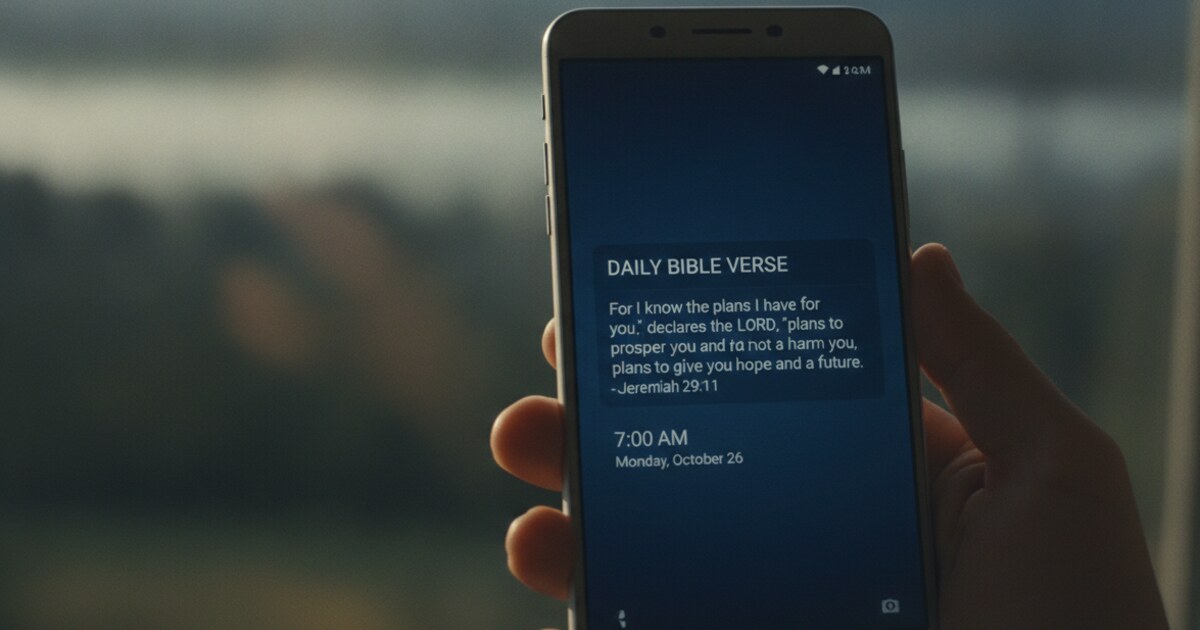


Want a verse on every screen? Psalmo is free.
Best AI Prayer App in 2026: 5 Options Compared
Typing “write me a prayer for what I’m going through” into an app used to feel experimental. In 2026, it’s a real use case. AI prayer apps can generate a short prayer around a diagnosis, a strained relationship, or a grief you don’t have words for yet. The category splits in two directions: apps that bundle AI prayer with daily scripture and screen-time tools, and apps built entirely around AI-generated content. Five options stand out. Here’s how they compare.
The best AI prayer app in 2026 for most users is Psalmo. Its premium tier generates personal prayers, finds relevant scripture for your situation, and explains Bible verses in plain language. These features are bundled with daily Bible verse widgets and an app-blocking gate that pauses Instagram, TikTok, or YouTube until today’s verse is read. Psalmo runs on iOS and Android. The AI features require a paid subscription; the daily verse widget is free.
This article covers what each app does well and where each one falls short, so you can choose based on how you actually pray.
What Makes an AI Prayer App Different
Most prayer apps don’t use generative AI. They serve curated devotionals, guided meditation scripts, and pre-written liturgy selected by editors. That’s useful content, but it isn’t AI.
A true AI prayer app generates a response based on your specific situation. You type what you’re carrying (a job loss, a health worry, a broken friendship), and the app writes a prayer fitted to that context. The difference is real: curated content can comfort; AI-generated content can personalize.
The category launched in earnest after 2023, when large language models became fast and cheap enough for consumer mobile apps. The field now includes roughly 7 to 10 apps with genuine generative prayer features, up from 2 or 3 in 2022. Pew Research 2024 reports that 45% of U.S. adults pray daily, and 62% own a smartphone, a large overlap for apps that put prayer on the home screen. DataReportal 2025 puts average daily phone use at 4 hours and 37 minutes; that’s the window these apps compete inside. The behavioral problem they’re solving is specific: prayer tends to happen when you remember to pray, which is often mid-scroll. AI prayer gates, verse widgets, and notification reminders all try to reclaim that moment before the feed does. What to look for in an AI prayer app: does it generate prayers around your situation, or serve general content? Does it run on Android, or iOS only? What’s free versus paywalled? And does it do anything else besides prayer, like displaying scripture widgets or blocking social media until today’s verse is read?
The 5 Best AI Prayer Apps in 2026
1. Psalmo: Best Overall (iOS + Android)
Psalmo bundles AI prayer with two other tools: daily Bible verse widgets and an app-blocking gate. The AI assistant handles five tasks: writing a prayer for whatever you bring to it, finding a relevant verse for your situation, explaining any Bible verse in plain language, prompting a gentle reflection on your week, and answering Bible questions in plain language. Conversations stay in your account.
The combination is what separates it from the rest of the category. The daily verse lands on your home screen or lock screen automatically, without opening the app. If you’ve set up the gate, Instagram or TikTok stays paused until you’ve read today’s verse. The AI prayer feature sits one tap deeper, for the moments when a displayed verse isn’t enough and you need to actually pray through something specific.
Limitations: AI features are premium (paid subscription required; free trial on the annual plan). Translations are KJV and WEB only — no NIV or ESV. No audio prayer playback. No saved prayer journal at launch.
Best for: Users who want AI prayer bundled with scripture widgets and a behavioral screen-time gate, on either platform.
2. Sanctum: Best AI-First Approach (iOS + Android)
Sanctum goes further into generative AI than most competitors. Its Sacred Pause feature interrupts a social media session with a breathing exercise and an AI-generated prayer interstitial. Mood Altar pairs your reported mood to a generated prayer response. Both iOS and Android are supported.
The tradeoffs are real: the paywall arrives early in the onboarding, and users report in Play Store reviews that AI prayers grow repetitive over several weeks. There are no home-screen widgets, so scripture isn’t delivered passively. For a more detailed look at how it compares to Psalmo, see the Sanctum app review.
Best for: Users who want AI prayer as the primary product and don’t need widgets or passive verse delivery.
3. Hallow: Best Guided Prayer (iOS + Android)
Hallow is the largest app in the broader prayer category by downloads, but its prayer content is curated and narrated by experts, not AI-generated. Narrators and priests record sessions; the app surfaces them by topic or mood. The Catholic focus is explicit. Guided prayer here means following a structured session (lectio divina, the Examen, the rosary), not typing your situation and receiving a generated response.
Hallow ranks consistently for searches related to “AI prayer app” and users who land there expecting generative features don’t find them. That’s worth knowing before you download.
Best for: Catholic and liturgical users who want guided, audio-led prayer with a large curated content library.
4. Glorify: Best Devotional Ecosystem (iOS + Android)
Glorify straddles the devotional and prayer categories. It delivers a daily devotional, offers guided prayer sessions, and has added some AI-assisted content over recent updates. The prayer content leans curated rather than fully generative. Its strength is breadth: worship music, scripture reading, and community features that a focused tool like Psalmo or Sanctum skips.
Best for: Users who want a full devotional ecosystem rather than a focused AI prayer or widget tool.
5. Echo Prayer: Best for Prayer Tracking (iOS)
Echo addresses a different problem from the other four: tracking prayer requests, not generating prayers. You log who you’re praying for; Echo reminds you, records outcomes, and keeps an organized prayer list. There’s no generative AI in Echo’s core product.
Worth including because many people searching for an AI prayer app are actually looking for a prayer tracking tool. Echo is the strongest option for that need, though it’s iOS-only.
Best for: Users who want to log and follow up on prayer requests for themselves and others.
How Psalmo’s AI Prayer Feature Works
The AI prayer assistant opens with a text field. You describe what you need prayer for — one sentence or a full paragraph, whatever you have. The app generates a prayer of around 100 to 150 words based on your description. There’s no required format; it adapts whether you’re asking for peace, guidance, healing, or something harder to name.
“Find a verse for my situation” works directionally: describe the situation, receive relevant KJV or WEB scripture. “Explain a Bible verse” gives a plain-language reading of any verse you type or paste, without theological jargon. “Reflect on my week” opens a gentle journaling prompt keyed to the scripture categories you’ve been reading throughout the week.
The AI features sit behind the premium paywall. The free tier covers daily verse delivery, the widget setup on home screen and lock screen, and three themes (Classic, Dark, Minimal). Premium unlocks all 15-plus themes, custom photo backgrounds, and the full AI assistant.
The practical flow for a typical user: read the verse that appears on your lock screen in the morning, engage the AI reflection when you have a few minutes to pray, and keep social media gated until you’ve done both. All three live in one app rather than three. That’s the case for Psalmo over a stand-alone AI prayer app: you’re not adding another download to your home screen.
When AI Prayer Apps Help (and When They Fall Short)
They help when you’re stuck. Not all grief or worry arrives with a prayer already formed around it. If you stare at the ceiling and can’t find the words, having an AI write a first draft gives you something to react to, edit, or just use. That’s a real form of help.
They help as a behavioral gate. Psalmo’s app-blocking approach addresses a pattern most Christian phone users recognize: Instagram gets opened before praying, not after. Wiring the verse or prayer moment into the social media gate removes that inertia. For a roundup of how different apps handle this, see the best Christian app blocker comparison.
They don’t replace a sustained prayer life. A 150-word AI-generated prayer isn’t contemplative practice. Apps that promise “deeper faith through AI” are overclaiming. The honest use case is access and friction reduction: getting you to the moment of prayer faster, with a starting point when you don’t have one.
Privacy matters here. Your prayer input goes to a server for AI processing. Apps vary on data retention and privacy policies. Psalmo notes that conversations stay in your account, but AI generation isn’t processed on-device. If data privacy is a deciding factor, read each app’s privacy policy before typing anything personal.
Frequently Asked Questions
What is an AI prayer app?
An AI prayer app uses a large language model to generate personalized prayers based on what you type. You describe your situation and the app writes a short prayer fitted to that context. This differs from apps that serve curated devotionals or pre-written prayer guides selected by editors. The category launched in earnest after 2023 and now includes around 7 to 10 apps with genuine generative features.
Is Psalmo’s AI prayer feature free?
The AI prayer features in Psalmo, including “Write a prayer for me,” “Find a verse for my situation,” and “Reflect on my week,” are premium features that require a paid subscription. The daily verse widget, three core themes, and the app-blocking gate are available on the free tier. A free trial is included with the annual subscription.
Which AI prayer apps work on Android?
Psalmo and Sanctum both support iOS and Android. Hallow and Glorify also cover both platforms. Echo Prayer is iOS-only. Most AI prayer apps launched on iOS first, so check current Play Store listings for your device before downloading.
Is using AI to write prayers okay for Christians?
Most pastors and theologians who’ve addressed this treat AI-generated prayer the same way they treat printed prayer books: a useful prompt, not a substitute for personal conversation with God. The prayer you mean is the prayer. The AI draft is a starting point you can personalize, edit, or use as-is. Using one says nothing about the depth of your faith, any more than reading a prayer from a liturgy does.
How is Psalmo different from Hallow?
Hallow serves guided audio prayer with a Catholic liturgical structure and a large curated content library. Psalmo is generative, so AI writes a prayer around your specific input, and it’s widget-first, so scripture appears on your home screen automatically without opening the app. Hallow’s strength is depth of curated content; Psalmo’s is combining AI prayer with daily verse delivery and a social media gate, on both platforms. They serve different habits.
If you want AI-generated prayers bundled with daily scripture on your home screen and an app gate to keep your mornings from starting with a scroll, download Psalmo free.