
Want a verse on every screen? Psalmo is free.
Digital Minimalism for Christians: A Practical Guide
The average American spends 4 hours and 37 minutes on their phone every day. That’s nearly a third of waking hours. For many Christians, that number sits uneasily alongside the call to “set your minds on things above” (Colossians 3:2, KJV). The phone isn’t going anywhere. Neither is the tension. Digital minimalism offers a philosophy and a set of practices for using technology on your own terms. For Christians, there’s a theological grounding for it that the secular version of the concept leaves out.
Digital minimalism for Christians means limiting phone and social media use so Scripture, prayer, and real relationships get the time they deserve. You don’t ban technology entirely. You build intentional habits: a daily verse before social apps open, scheduled check-ins instead of constant notifications, a home screen that reflects your values.
What Digital Minimalism Means for Christians
Cal Newport coined the phrase in his 2019 book Digital Minimalism: Choosing a Focused Life in a Noisy World. His definition: a philosophy of technology use where you focus your online time on a small number of carefully selected activities that strongly support things you value, and happily miss out on everything else.
Newport’s framework is deliberately secular, built around personal choice. Christians can take it and ground it in something sturdier: what does God call me to attend to?
That question has a data backdrop. DataReportal’s 2025 Global Digital Report puts daily mobile screen time at 4 hours and 37 minutes globally, with social media alone averaging 2 hours and 22 minutes. IDC research found that 79% of smartphone users check their device within 15 minutes of waking up. APA 2023 data shows 37% of Americans report phone use disrupts their sleep, and 53% check their phone within 5 minutes of waking. Phillippa Lally’s landmark 2010 UCL study on habit formation established that building a new daily behavior takes 66 to 254 days, which means breaking a 4-hour phone habit requires deliberate behavioral scaffolding, not willpower alone. Jonathan Haidt’s 2024 research in The Anxious Generation links heavy social media use to increased anxiety and depression across both adults and adolescents, adding empirical weight to what many Christians already sense spiritually. The data reinforces what Philippians 4:8 has always said: attention requires active management.
Digital minimalism, then, centers on one idea: your phone use should be a deliberate choice, not a default you fell into.
The Biblical Foundation for Digital Minimalism
Philippians 4:8 uses the Greek word logizomai, meaning to calculate or take deliberate stock of something. Paul uses the present active imperative: “think on these things.” That’s an ongoing command to direct attention, not a description of a feeling. Every time you open your phone by reflex rather than intention, you’re doing the opposite. Practicing digital minimalism, from a Christian standpoint, is what obeying logizomai looks like in the smartphone era.
Romans 12:2 tells Christians to “be not conformed to this world.” The Greek verb syschematizesthe describes being pressed into a shape from outside. Social media algorithms press. They’re engineered to shape your attention, your emotional state, your desires. Choosing how and when you engage is a form of resistance.
Proverbs 4:23: “Keep thy heart with all diligence; for out of it are the issues of life.” The Hebrew word natsar means to guard like a sentinel guards a city gate. You decide what gets in.
Matthew 6:21: “For where your treasure is, there will your heart be also.” Hours are a form of treasure. A Christian who spends 4 hours on their phone and 20 minutes in Scripture has shown, in numbers, where attention actually lives.
These four texts aren’t a list of rules about phones. They’re a consistent picture of what Scripture says about divided attention. Phones produce a specific condition: scattered attention pulled toward whatever is loudest. That’s exactly what logizomai, natsar, and syschematizesthe were written to address.
None of this makes technology sinful. Christians who use digital tools for ministry, work, or family connection aren’t doing anything wrong. The question underneath the question is simpler: is your phone use a choice, or is it just happening to you?
5 Practical Steps to Start
You don’t need to throw your phone in a lake. Digital minimalism is about building deliberate systems, not embracing asceticism.
1. Do a 30-day digital declutter. Newport’s original suggestion: remove all optional apps and platforms for 30 days. Whatever you genuinely miss earns back its place. What you don’t miss was costing more than you realized. Most people who try this report the first week is hard, the second is clarifying, and the third feels like waking up. Christians who’ve done it often say their prayer life improved in the first two weeks, simply because the mental space wasn’t already claimed.
2. Put Scripture first. Before opening any social app, read your daily verse. The verse shapes the tone of your morning. A daily Bible verse widget makes this automatic: you see Scripture the moment you pick up your phone, before the notification count loads. The Bible before phone challenge breaks this into a 7-day structured practice with daily prompts and reflection questions for each step.
3. Rethink your home screen. Most home screens are an advertisement for distraction: a grid of notification badges designed to pull your tap. Replace the first screen with something that reflects your values. A daily Bible verse widget, a prayer note, or a gratitude reminder all work. Move social apps off the home screen entirely. You can still reach them; you just won’t open them by reflex.
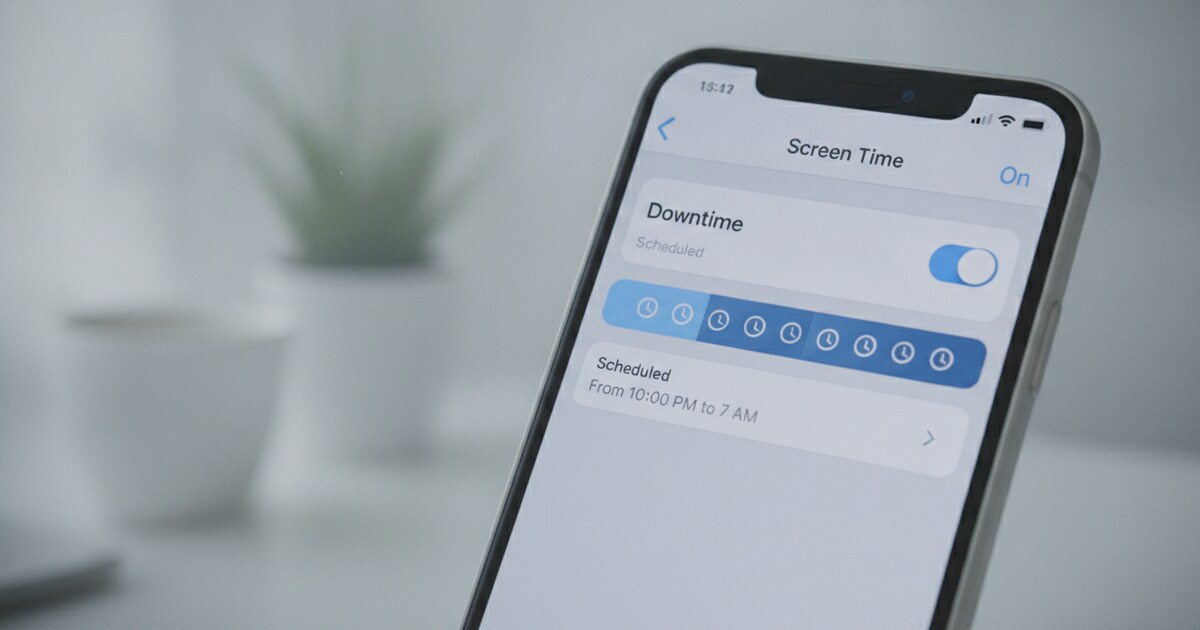
4. Schedule your social media time. Instead of checking Instagram or TikTok reactively throughout the day, give it one 20-to-30-minute window. You’ll likely get the same value from the platform, and you’ll cut the dopamine loop that makes checking feel necessary even when there’s nothing new to see.
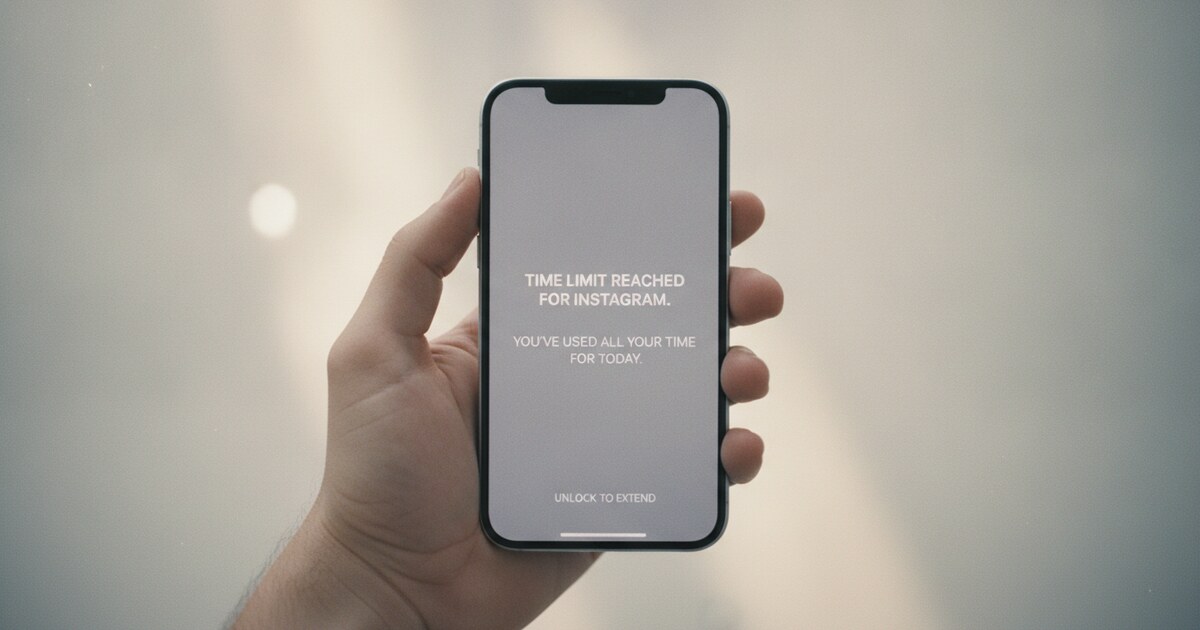
5. Use an app gate. A gate is friction built into your phone: you have to read today’s Bible verse before a social app opens. It’s a small liturgical practice, wired into your phone’s structure rather than held in your head as a resolution. For Christians trying to put faith first, this is one of the most practical tools available. The Christian social media fast pairs well with this step if you want a more structured commitment, with both a 7-day and a 40-day version outlined there.
What Christian Digital Minimalism Gets Right (And What It Misses)
Newport’s secular framework has one real limitation for Christians: it locates motivation in personal preference. You minimize because you prefer solitude, value deep work, and decide what matters. That’s a solid foundation for productivity. It’s a shaky one for holiness. The source of motivation determines whether the practice holds when it’s inconvenient.
Christian formation aims at Christlikeness, not just a calmer schedule. Digital minimalism works best when it’s paired with what it makes room for: prayer, Scripture, genuine community, service.
Cutting phone use to 90 minutes a day means very little if those freed hours go to television. Jesus withdrew to solitary places to pray (Luke 5:16). The pattern combines withdrawal with purpose. Digital minimalism clears the withdrawal time. What you fill it with determines whether the practice becomes spiritual formation or just a productivity adjustment.
The phone’s appetite for attention is real. Reducing it by two hours opens actual space. The question is what that space gets filled with. Less noise creates the conditions for something better; it doesn’t supply the better thing. For the biblical texts behind the phone-and-faith tension, the article on what the Bible says about social media covers the key passages in depth.
Frequently Asked Questions
Does the Bible support minimalism?
The Bible doesn’t prescribe minimalism as a lifestyle, but it warns repeatedly against letting possessions, status, or entertainment compete with God for your attention. Hebrews 13:5, Matthew 6:21, and Romans 12:2 all point in the same direction: hold things loosely, guard your mind deliberately. Digital minimalism applies those principles to the smartphone era.
What’s a practical first step for Christian digital minimalism?
Remove social media apps from your phone’s home screen today. You don’t have to delete them; just move them out of the reflexive tap zone. Pair this with a daily Bible verse widget on your first screen. That single swap shifts what your eyes land on first from a notification badge to Scripture, with no willpower required after the initial setup.
How is Christian digital minimalism different from quitting social media?
Quitting social media is a blunt instrument. Digital minimalism is more precise: identify what you value, keep the tools that serve those values, and use them on your terms. For Christians, that filter runs through theology. What does faithful stewardship of attention look like, given what God calls us to?
Does Psalmo help with digital minimalism?
Psalmo’s app-blocking feature gates Instagram, TikTok, X, YouTube, or Snapchat behind today’s Bible verse. The app stays accessible; it costs 30 seconds of Scripture first. That friction is the practical mechanic of digital minimalism: intentionality built into your phone’s structure rather than a resolution that fades by Tuesday.
Psalmo is free on iOS and Android. The app-gating feature and daily verse widget are both available on the free tier with no subscription required. If you want to pair the app with a fuller practice, the Christian social media fast is a solid starting point.