
Want a verse on every screen? Psalmo is free.
The Bible Before Phone Challenge: A 7-Day Plan to Break Your Morning Scroll
Most people pick up their phone before they’ve said a word to anyone. IDC research from 2023 found that 79% of smartphone users check their device within 15 minutes of waking up. For many of us, that number is closer to 15 seconds. The notifications, the news, the social feed: all before the coffee.
The Bible before phone challenge works on one idea. What you consume first in the morning shapes how the rest of the day feels. If you push Scripture into that first slot instead of your phone, the rest of the day follows from a different starting point.
This is a 7-day plan: practical, day-by-day, and designed to work even if you’ve tried and drifted before.
The Bible before phone challenge is a morning practice where you read Scripture before checking your phone or opening any app. Most people start with 5 to 10 minutes and a single passage: a Psalm, a Gospel verse, or one short chapter. The goal is to put the Bible in the first slot of the morning, before the scroll starts.
What Is the Bible Before Phone Challenge?
The idea has circulated in Christian circles for years. Justin Whitmel Earley, whose book The Common Rule outlines a set of daily habits for intentional living, includes “Scripture before phone” as a core daily practice. Trevin Wax wrote about it at The Gospel Coalition, noting it’s the habit from his writing that readers mention more than almost anything else.
The logic is straightforward. Your phone asks, “What do you need to do today?” Scripture asks, “Who are you?” Those two starting questions pull you toward different frames for the whole morning.
The challenge format turns a loose intention into a concrete commitment: 7 days, one practice, daily.
The Bible before phone challenge is built on frequency. The Center for Bible Engagement surveyed more than 40,000 people across age groups and found that reading Scripture at least 4 days per week produced meaningful reductions in loneliness, anger, and anxiety. Reading once a week showed almost no effect. The variable that matters is how often, not how long. IDC’s 2023 smartphone behavior report found that 79% of smartphone users check their device within 15 minutes of waking. DataReportal’s 2025 global survey put average daily screen time at 4 hours 37 minutes. The morning window, the first 15 minutes before you open a single app, is the highest-leverage point to redirect. Earley’s Common Rule frames the practice as a daily habit: open Scripture before the phone. Wax, writing at The Gospel Coalition, noted it was the habit readers brought up more than anything else from his writing. Seven days is enough to feel the difference, and to start building something longer.
Why the Morning Scroll Is Harder to Break Than It Looks
Most of the difficulty is neurochemical.
Cortisol peaks during the 30 to 45 minutes after you wake up, a process called the cortisol awakening response. Your brain is highly alert and highly reactive during this window. Phones are designed to exploit this: notifications trigger dopamine, headlines push the cortisol that’s already elevated, and social media feeds trigger comparison loops before you’ve fully formed a thought.
By the time 15 minutes have passed, your nervous system has already received a full broadcast. Someone else’s wedding. A political argument. Two product ads. A work email you can’t answer yet.
Philippians 4:8 frames the alternative plainly: “whatsoever things are true, whatsoever things are honest… think on these things” (KJV). The Greek word Paul uses is logizomai, which refers to deliberate, active reasoning rather than passive reception. The morning scroll is passive by design. The challenge is an act of active attention.
If you’ve tried this before and it didn’t hold, a weak morning environment is usually the real obstacle. More on that below.
The 7-Day Bible Before Phone Challenge
Seven days is long enough to feel the shift and short enough to commit to without dread. Here’s how the week builds.
Days 1 and 2: Change your environment before you change your behavior.
Move your phone charger out of the bedroom, or at least across the room. Set a physical alarm clock or a smart speaker instead of using your phone as the alarm. Put a Bible, a journal, or a card with a single verse where your phone used to be on the nightstand.
Environment design removes the willpower requirement. If the phone isn’t in arm’s reach, the choice is easy.
Days 3 and 4: Build the reading routine.
Start with 5 minutes and one passage. The Psalms work well here: Psalm 23, Psalm 46, Psalm 139, Psalm 121. Or pick a chapter from the Gospels and read one each morning. Matthew 5-7 (the Sermon on the Mount) gives you three chapters across the four days.
The goal is to make the Bible your first input of the day. Read it slowly. If something catches your attention, sit with it. Set a timer if it helps you start without worrying about going too long.
Days 5 and 6: Add a gate mechanic.
Days 1 through 4 rely on environment and routine. Days 5 and 6 add a harder lock: the apps you’d normally open first are gated until the verse is read.
If you have Psalmo on your phone, you can set it to block Instagram, TikTok, X, YouTube, or Snapchat until today’s Bible verse has been opened. Once you read it, the apps unlock for the rest of the day. This shifts the challenge from “I’m trying not to check my phone” to “I can’t open Instagram until I’ve read the verse.” The friction moves from the desired behavior to the competing one.
For people who’ve run the challenge without a gate and found it slipping by day 4, this is usually the missing piece.
Day 7: Reflect.
On day 7, don’t just check the box. Sit with two questions. Did the morning feel different when you started with Scripture? And what would it take to keep going past day 7?
Most people who finish the week want to continue. Completing the challenge shows you it’s possible. The harder work is what comes after day 7: turning the one-week commitment into a daily default.
How to Make the Habit Stick After Day 7
The challenge is a launch point. Habits take longer than a week to wire in. Phillippa Lally’s 2010 UCL study, which tracked 96 participants building new behaviors, found an average of 66 days to reach automaticity, with a range of 18 to 254 days depending on the person and the behavior. Seven days won’t do it alone, but seven days can show you what’s possible.
After the challenge, pick one of these approaches.
Habit stacking anchors the new behavior to something you already do. If you always make coffee first, put the Bible on the counter next to the coffee maker. The coffee routine triggers the reading before you’ve consciously made a choice.
Streak tracking works for some people and not others. Psalmo tracks a daily reading streak that rewards consistency without shaming gaps. The CBE data points to 4 or more days per week as the frequency that moves the needle on emotional outcomes. On days when you can’t do a full chapter, opening a single verse still counts.
Locking the apps is the most reliable option for anyone whose challenge week revealed how automatic the morning scroll really is. Psalmo blocks the social platforms you choose until today’s verse is read. The design keeps the habit from sliding back into default without you noticing.
It’s a system-based approach. You’ve carved out a sequence where Scripture comes first automatically, and the competing apps can only open after. That’s what how to stop doomscrolling as a Christian and a Christian social media fast both point to: behavioral guardrails work better than sustained willpower.
The best Bible apps for reducing screen time all do some version of this. Psalmo’s specific design (lock the apps you choose, not a general phone timer) is the version built around the challenge format.
Frequently Asked Questions
What is the Bible before phone challenge?
The Bible before phone challenge is a morning habit where you read Scripture before opening any app or checking notifications. Most people start with 5 to 10 minutes and a single passage: a Psalm, a verse from the Gospels, or one short chapter. The goal is to make the Bible the first input of your day instead of your phone.
How long do I need to read to make it count?
Five minutes is enough to start. The Center for Bible Engagement’s research shows that the key variable is frequency (reading 4 or more days per week), not duration. A short daily habit outperforms a longer one you do twice a week. Start with one Psalm per morning and expand from there.
What if I miss a day?
Start again the next morning. The challenge is a tool, not a performance. Missing a day doesn’t reset the benefit of the days you did complete. The CBE data shows 4 or more days per week produces meaningful outcomes, which means 5 successful days out of 7 is still well inside the range that moves the needle.
What app helps with the Bible before phone challenge?
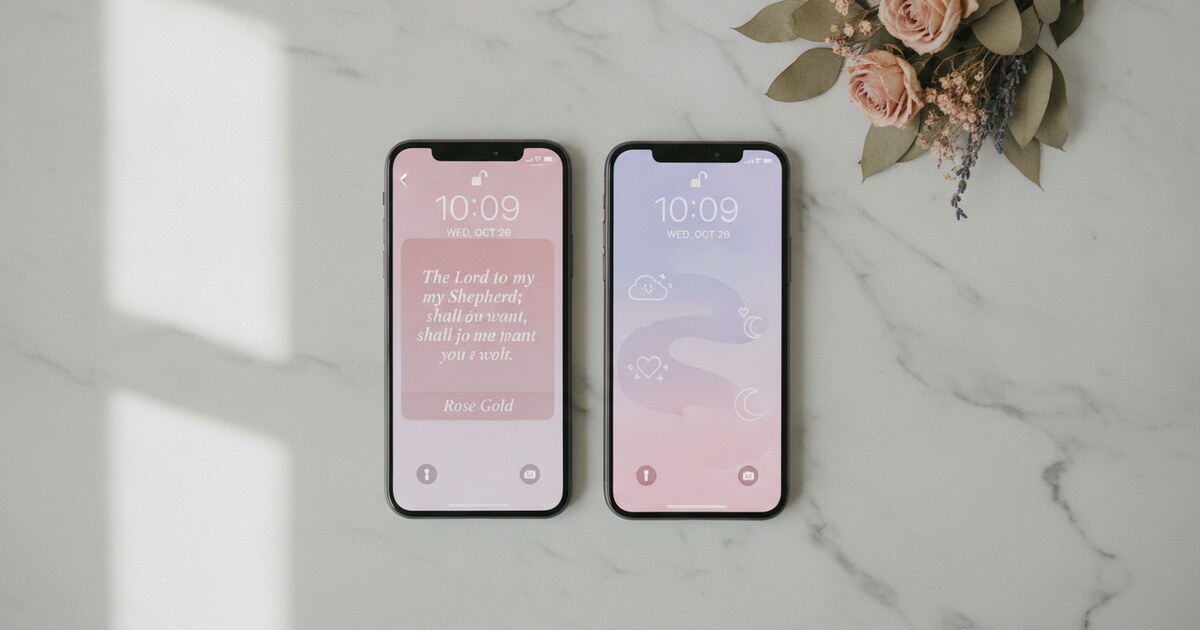
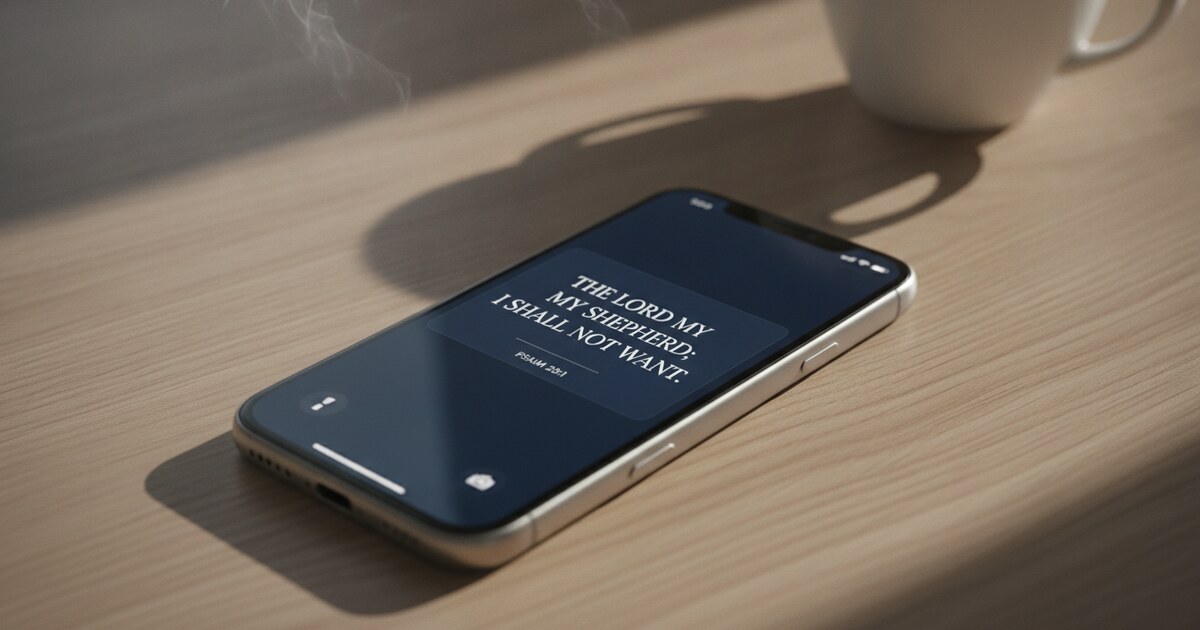
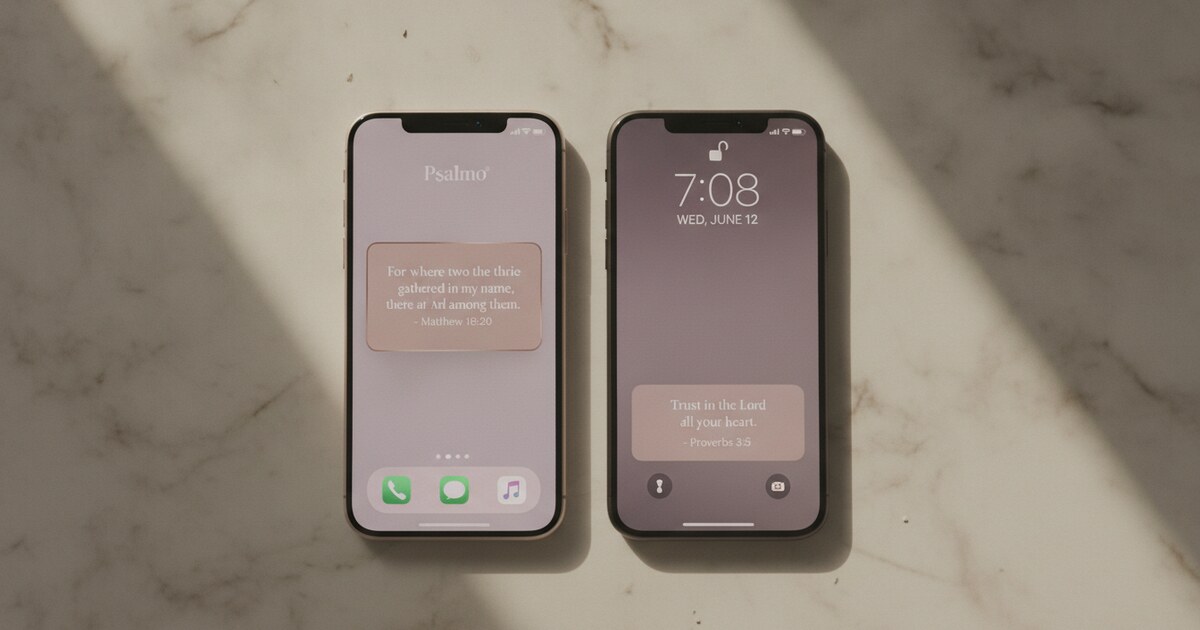
Psalmo is built for this. It puts a Bible verse on your home screen or lock screen each morning, and it can gate the apps you’d normally open first (Instagram, TikTok, X, YouTube, Snapchat) until you’ve read today’s verse. Once you open it, the apps unlock. It’s free on both iOS and Android.
Does reading Scripture in the morning actually change anything?
The CBE’s survey across 40,000 people found that reading Scripture at least 4 days per week correlated with lower rates of loneliness, anger, and anxiety compared to less frequent readers. Reading once a week showed almost no measurable effect. The practice works when it’s consistent. The challenge is designed to build that consistency.
Psalmo is free to download on iOS and Android. It places a Bible verse on your home screen or lock screen every morning, and its app-gating feature locks Instagram, TikTok, X, YouTube, and Snapchat until today’s verse is read. If you’ve been looking for a way to make the Bible before phone habit automatic rather than aspirational, Psalmo removes the friction from the right side of the equation.