

Want a verse on every screen? Psalmo is free.
Hallow vs Glorify: Which Christian App Is Right for You?
If you’ve spent any time searching for a Christian devotional app, two names keep surfacing: Hallow and Glorify. Both have millions of downloads, polished audio content, and free tiers worth testing before committing. But they serve different traditions, and picking the wrong one means paying full price for a library you’ll barely open.
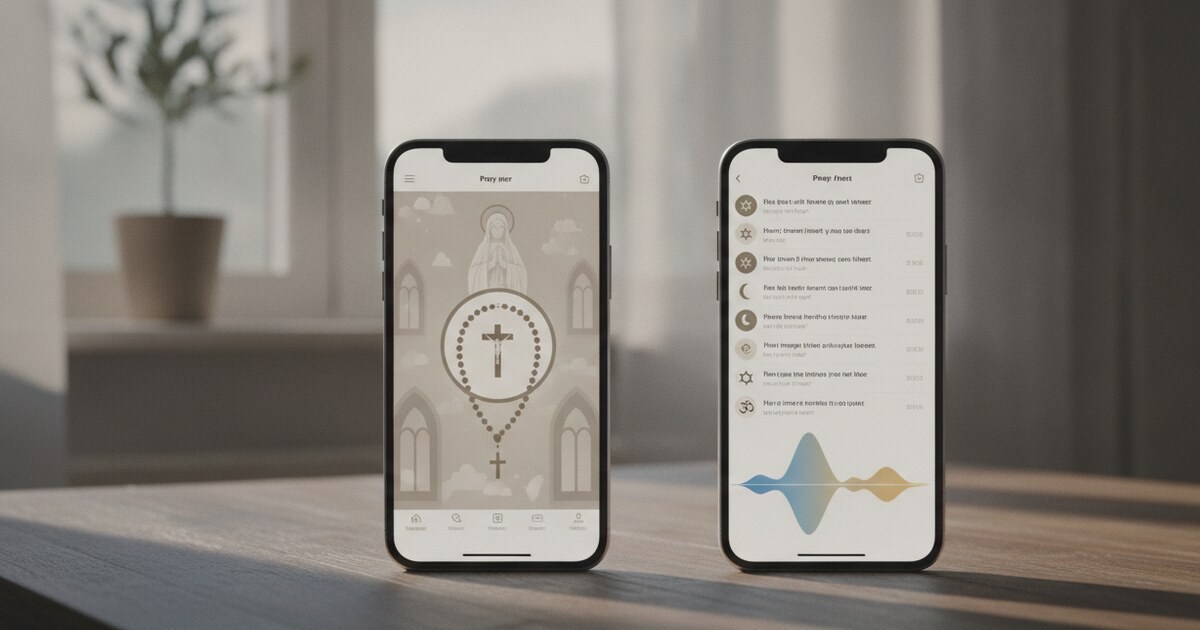
Hallow is Catholic by design. Glorify is built for evangelical and non-denominational Christians. Neither is better overall. They’re different tools aimed at different practice. This comparison breaks down exactly what each app does, where each falls short, and when a third option is worth considering for users who want Scripture on their home screen rather than guided audio in their ears.
Hallow vs Glorify comes down to tradition. Hallow is Catholic-first, built around the Rosary, Liturgy of the Hours, and guided audio by narrators including Jonathan Roumie and Mark Wahlberg. Glorify is non-denominational and evangelical-leaning, centered on 5-minute morning devotionals, worship audio, and Scripture sleep meditations. Catholics should choose Hallow. Protestant and non-denominational Christians get more from Glorify.
What Is Hallow?
Hallow launched in 2018, founded in Chicago by Alex Jones, Alessandro DiSanto, and Erich Kerekes as explicitly Catholic spiritual software. By 2026 it became the No. 1 Catholic app globally, with tens of millions of installs. Its audio guide roster is the sharpest product edge: Jonathan Roumie (star of The Chosen) narrates the Bible in a Year, Mark Wahlberg guides Rosary sessions, and Chris Pratt appears in general prayer content. Daily content covers the Rosary, Examen of Conscience, Lectio Divina, and the Liturgy of the Hours, each in 3 session lengths (5, 10, or 15 minutes). Hallow Plus runs $12.99/month or $69.99/year, with a one-time lifetime tier at $149.99 and a Friends and Family plan at $119.99/year for up to 6 users. Apple Watch and CarPlay integration let sessions start from the wrist or dashboard without unlocking the phone. Everything downloads for offline use.
For practicing Catholics, nothing else comes close. The Rosary, Examen, Liturgy of the Hours, and Lectio Divina in its Catholic form are the core product, built from the ground up for Catholic sacramental practice. The narrator roster (Roumie, Wahlberg, Pratt) delivers production quality no other faith app touches.
For non-Catholics, the math shifts fast. Roughly 40-50% of Hallow’s content library (the liturgical and sacramental sessions) assumes a Catholic formation most Protestant users don’t bring to it. The Bible in a Year audio and general meditation sessions stay accessible, but paying $69.99/year for a partial library is a tougher case to make.
What Is Glorify?
Glorify launched in 2019, founded in London by Henry Costa and backed by Andreessen Horowitz. By 2026 it had crossed 20 million downloads, making it the most-downloaded non-denominational Christian app globally. Its design philosophy centers on one thing: a 5-minute morning devotional that most users actually complete.
Each session pairs a Scripture passage with brief reflection prompts and ambient worship audio. The journal follows the same friction-reduction principle: short prompts, quick saves, no open-ended writing pressure. New believers and people returning to faith after a gap consistently cite Glorify as less intimidating than study-focused or liturgically structured apps.
Glorify’s sleep meditation library is the second standout feature. Production quality rivals secular apps like Calm, pairing ambient audio with Scripture passages for a bedtime wind-down. For users who’ve been paying for Calm or Headspace specifically for sleep content, Glorify consolidates that function into one Christian subscription.
The theology skews evangelical-charismatic in tone. Catholic, Orthodox, and mainline Protestant users can pull individual devotionals without major friction, but they won’t find the liturgical structure Hallow provides.
Glorify’s gaps are real. No commentary, cross-references, or original-language tools. No app blocking. No home-screen widget. Scripture shows up only when you open the app. Users who want deeper Bible study or visible Scripture throughout the day need a second app alongside it.
Pricing: $6.99/month ($83.88/year if paying monthly) for Glorify+. The free tier includes a rotating daily devotional, basic journal access, and a limited selection of worship audio.
Hallow vs Glorify: Head-to-Head
| Feature | Hallow | Glorify | Psalmo |
|---|---|---|---|
| Tradition | Catholic | Non-denom / evangelical | Any |
| Monthly price | $12.99 | $6.99 | Free (premium available) |
| Annual price | $69.99 | $83.88 (monthly rate × 12) | Free (premium available) |
| Lifetime option | $149.99 | Occasional promotion | — |
| Free tier | Rosary + partial Bible in a Year | Rotating devotional + basic journal | Full widgets + app blocking |
| Guided audio | Yes | Yes | No |
| Sleep meditations | No | Yes | No |
| Apple Watch | Yes | No | No |
| CarPlay | Yes | No | No |
| App blocking | No | No | Yes |
| Home-screen widget | No | No | Yes (3 sizes, iOS + Android) |
| Lock-screen widget | No | No | Yes (iOS 16+) |
| Bible translations | — | — | KJV + WEB |
Hallow’s annual plan at $69.99/year works out to $5.83/month. Glorify’s $6.99/month rate, if annualized without an annual discount, adds up to $83.88. Both have lifetime options worth looking at for long-term users.
The gap where neither app competes: home-screen visibility. Both require opening the app to see a verse. If you want Scripture visible on your phone throughout the day, neither Hallow nor Glorify covers that.
Who Should Choose Hallow
Choose Hallow if you’re Catholic and actively use traditional prayer forms.
The Rosary sequences, Examen structure, and Liturgy of the Hours are the core product, not optional add-ons. Every session is designed with Catholic sacramental practice as the assumed baseline. The narrator roster (Jonathan Roumie, Mark Wahlberg, Chris Pratt) gives guided prayer a production quality that other faith apps don’t match.
Hallow also holds up for commute-based prayer. CarPlay and Apple Watch integrations let you start a Rosary session from your dashboard or wrist without touching the phone screen. For Catholics who want to fold the Rosary into a daily drive, that’s a real advantage.
The Friends and Family plan at $119.99/year for 6 users is worth mentioning for Catholic households. At roughly $20 per person per year, it changes the value calculation considerably from a solo subscription.
Non-Catholics can still access the Bible in a Year audio and general meditation sessions. But the library’s strongest content assumes Catholic practice, and that won’t change with any update.
Who Should Choose Glorify
Choose Glorify if you’re Protestant, non-denominational, or evangelical-leaning and want a sustainable daily devotional habit you’ll actually keep.
The 5-minute morning devotional is one of the better-designed entry points in the Christian app category. Short enough to complete before anything else in the morning routine, structured enough to feel intentional. For new believers or people returning to faith after time away, Glorify’s design trims the activation energy that causes people to skip after the first week.
If you currently use Calm or Headspace for sleep content, Glorify’s sleep meditations can replace that subscription with Scripture-anchored audio. The production quality holds up against mainstream sleep apps, and consolidating 2 subscriptions into one tends to stick better as a habit.
Glorify’s journal works particularly well for people who reflect in fragments rather than long written entries. Brief prompts, no scrolling canvas, quick saves. It’s not a deep-study journal. It’s a low-resistance daily check-in.
At $6.99/month with a functional free tier, Glorify is accessible enough to test before committing. The free tier’s rotating daily devotional gives you the core experience without any payment.
Glorify isn’t the right fit for Catholics seeking liturgical structure, users who want original-language Bible study tools, or anyone who wants Scripture visible on their home screen rather than scheduled in a dedicated session.
What If Neither Fits?
Hallow and Glorify are both audio-first. If what you want is Scripture on your home screen — a daily verse widget that refreshes automatically, a lock screen that shows today’s reading before you even unlock the phone — neither one delivers that.
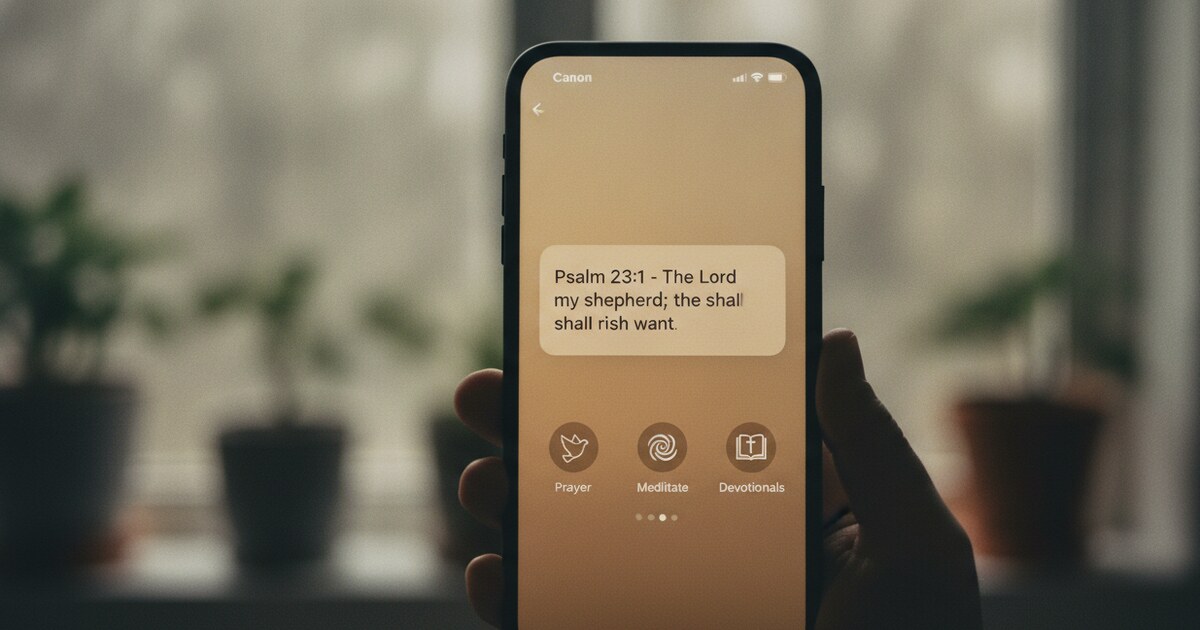
Psalmo handles it differently. It puts a daily Bible verse widget on your home screen (3 sizes, iOS and Android) and lock screen (iOS 16+). The app gate lets you block Instagram, TikTok, X, YouTube, or Snapchat until you’ve read today’s verse. The free tier includes the full widget system and app blocking with KJV and World English Bible translations. No paywall on the core function. Premium adds AI prayer features (write a prayer, find a verse for your situation, explain a Bible verse, reflect on your week) with a free trial.
For users who want guided audio devotionals, Hallow or Glorify are the right tools. For users who want Scripture embedded in the phone’s home screen with a behavioral accountability layer, Psalmo builds that habit through a different mechanism.
For more context, see our best Christian app blocker guide, Hallow alternatives (free), Glorify app alternatives, and AI prayer apps. Download Psalmo free at psalmo.app/get and get a daily Bible verse on your home screen, with the apps that pull you away gated until you’ve read it.
Frequently Asked Questions
Is Hallow better than Glorify?
Hallow is better for Catholics. Glorify is better for Protestant, non-denominational, and evangelical Christians. Both apps have polished audio content and functional free tiers. The deciding factor is almost always tradition: Hallow’s core library (Rosary, Examen, Liturgy of the Hours) doesn’t translate meaningfully to non-Catholic practice, while Glorify’s devotionals work across most Protestant traditions without friction.
Is Glorify free?
Glorify has a free tier that includes a rotating daily devotional, basic journal access, and a limited selection of worship audio. The full library, all sleep meditations, and the complete devotional archive require Glorify+, priced at $6.99/month. There’s no standard annual plan discount publicly listed; paying monthly annualizes to $83.88/year.
Is Hallow free?
Hallow’s free tier covers daily prayers including the Rosary and a portion of the Bible in a Year narration. Full access to the guide library, offline downloads, extended sessions, and the complete Bible in a Year requires Hallow Plus at $69.99/year or $12.99/month. A one-time lifetime option costs $149.99. A Friends and Family plan runs $119.99/year for up to 6 users.
Can non-Catholics use Hallow?
Yes, but the value drops sharply. The Rosary, Examen, Liturgy of the Hours, and Lectio Divina in its Catholic form represent a significant portion of the content library. Non-Catholics can still access the Bible in a Year audio and general guided meditations, but they won’t use much of what makes Hallow worth paying for. Glorify or Psalmo likely serve non-Catholics better.
Which app has better sleep content?
Glorify leads on Scripture sleep meditations. Production quality rivals secular apps like Calm, with ambient audio paired to Bible passages for a bedtime wind-down. Hallow doesn’t offer a dedicated sleep meditation track. If sleep content is the primary use case, Glorify is the clearer pick.