
Want a verse on every screen? Psalmo is free.
How to Break Phone Addiction: 7 Proven Steps
Your screen time report shows 5 hours yesterday. The day before, 4 hours 45 minutes. You’ve deleted apps, set timers, and promised yourself you’d change. Then downloaded them again a week later. The reason that cycle keeps repeating is the design baked into every app you keep reaching for.
Every major social app is built around variable reward: the same psychological mechanism that makes slot machines so compelling. Your phone delivers unpredictable hits of likes, replies, and news, and unpredictability is what locks the loop in place. This guide covers how to break phone addiction: what’s actually happening in your brain, and 7 steps that work with the mechanism rather than against it.
To break phone addiction, focus on environment design first. Audit your screen time, disable non-essential notifications, move distracting apps off your home screen, add friction before opening them, replace the scroll reflex with a physical habit, and build in accountability. Willpower is the least reliable tool against a conditioned dopamine loop. Friction works far better.
Why Phone Addiction Beats Willpower
Phone addiction works through the same dopamine loop as slot machines. Every notification, like, or reply carries an unpredictable reward, and unpredictability is what makes the loop so resistant to escape. The average person unlocks their phone 96 times a day, according to Asurion’s 2023 research, and daily global screen time sits at 4 hours 37 minutes (DataReportal 2025). Half of all phone pickups happen within 3 minutes of the previous one, which means most of this behavior is automatic, not conscious. The American Psychological Association’s 2023 survey found 37% of adults felt anxious when they couldn’t check their phones, meaning the phone’s absence itself becomes a trigger. Phillippa Lally’s 2010 study at University College London found habit loops solidify over 66 to 254 days, and the phone habit re-triggers every 3 minutes, making it far more entrenched than most daily habits. Durable change starts by redesigning the environment that keeps the loop running.
That mechanism has a secondary layer most people don’t anticipate. The anxiety you feel when your phone isn’t nearby is itself a product of the loop: the urge rises, you check, the urge subsides, and relief reinforces checking as the fix. Breaking that means the urge has to rise and pass without checking, enough times for the brain to learn the discomfort resolves on its own.
Signs You’re Dealing with Phone Addiction
Not everyone who uses their phone a lot has a problem with it. The signal is loss of control: picking it up to check one thing and finding 30 minutes gone; reaching for it mid-conversation without thinking; feeling irritable when it’s not nearby.
More specific signs to watch for:
- Checking the phone within the first few minutes of waking up
- Using it during meals even when eating alone
- Reaching for it automatically whenever a conversation pauses
- Screen time consistently higher than you’d admit if someone asked
- Trying to cut back and reverting within 2 or 3 days
If 3 or more of those fit, the 7 steps below are built for your situation.
How to Break Phone Addiction: 7 Steps
Step 1: See your baseline. Before changing anything, check your actual screen time. On iPhone: Settings → Screen Time → See All Activity. On Android: Settings → Digital Wellbeing → Dashboard. Write down the daily average and your top 3 apps by time. Most people underestimate their usage by 30 to 50%. Seeing the real number tends to make the next step feel urgent rather than optional.
Step 2: Kill notifications. Every notification is a cue. Cues start habit loops. Go into your notification settings and turn off every app that isn’t calls, texts, or calendar. Cut badges too; they function as low-level cues even when you don’t consciously register them. A phone without constant interruptions still works for everything you actually need.
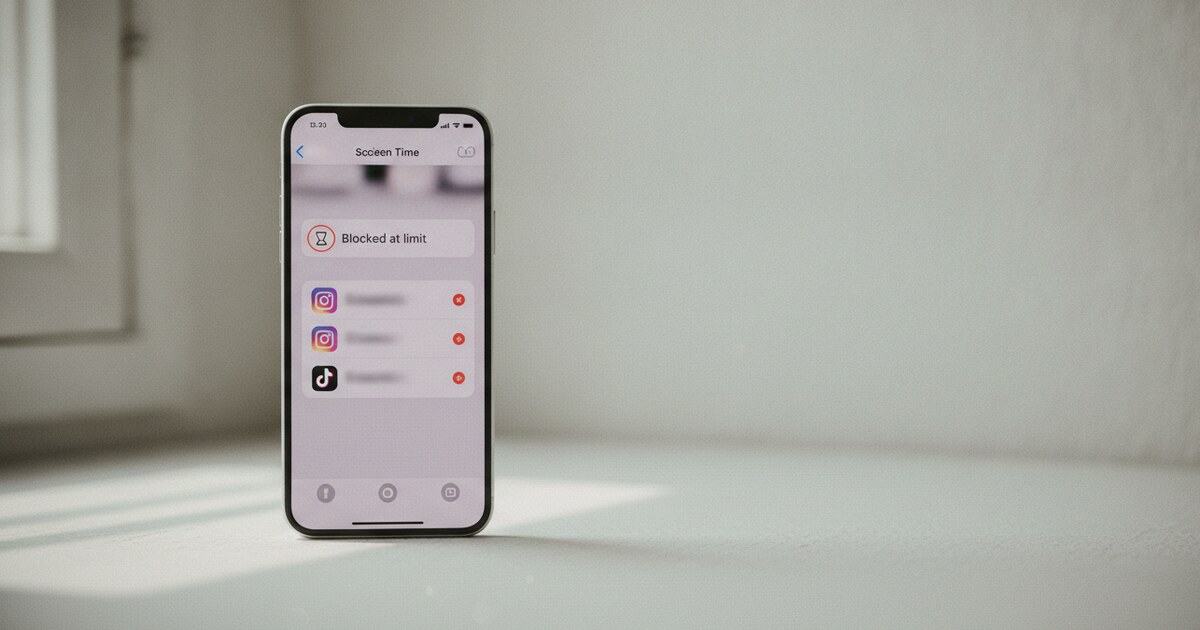
Step 3: Move the apps. Bury social apps in a folder on a third home screen page, or delete them from your phone and open them only through a browser. The extra 4 or 5 taps create friction. Friction works because automatic behavior depends on ease. Make it slightly harder, and most reflex pickups don’t happen at all.
Step 4: Add a deliberate pause before distracting apps. Grayscale mode removes the color rewards that make apps visually compelling (iPhone: Settings → Accessibility → Display & Text Size → Color Filters; Android: Settings → Digital Wellbeing → Grayscale). Apps like One Sec insert a short breathing pause before the app opens, giving your decision-making brain time to catch up with the impulse. A Scripture-gate app turns the pause into a reading habit; more on that below. You’re converting an automatic behavior into a deliberate choice.
Step 5: Replace the reflex. The scroll urge shows up in predictable moments: the first 60 seconds of waking, any wait longer than 30 seconds, sitting on the couch after dinner. Map those moments and put a physical replacement in each one. A book on the nightstand handles the morning. A stretch or a brief walk handles boredom gaps. The behavior needs an alternative, not just an empty slot.
Step 6: Batch your phone use. Instead of checking reactively throughout the day, pick 2 or 3 fixed 15-minute windows for social apps and messages. Outside those windows, the phone goes face-down. Batching doesn’t require deleting anything or extreme restriction. It converts a constant drip into a deliberate session, which most people find far more sustainable.
Step 7: Build in accountability. Tell one person what you’re working on and check in with them weekly. The social commitment functions as a behavioral anchor: people cut far more corners on private commitments than on ones made to someone else. A simple weekly note tracking your screen time average also helps; visible progress is more motivating than invisible effort.
How Long Does It Take to Break Phone Addiction?
Within the first 3 to 5 days of minimal phone use, most people notice better sleep and reduced baseline anxiety. That’s real progress, but it’s clearing a temporary state rather than rewriting a habit.
The habit itself, the automatic reach when bored or stressed, takes longer. Phillippa Lally’s 2010 University College London study found habit loops solidify over 66 to 254 days, with a median around 66 days for simple single-trigger behaviors. Phone habits, with their multiple daily triggers, tend toward the longer end of that range.
The practical frame: expect the automatic urge to weaken meaningfully over 8 to 10 weeks of consistent friction. If the environmental changes from Steps 2 through 4 are in place, you won’t feel like you’re white-knuckling it. The friction tools do most of the work.
What the “3 days without a phone” research actually measures is a reduction in cortisol and self-reported stress. That’s worth doing as a reset. It doesn’t substitute for the longer structural changes.
For Christians: The Scripture-Gate Method
If faith is part of your life, the pause in Step 4 can become something more purposeful than a breathing exercise.
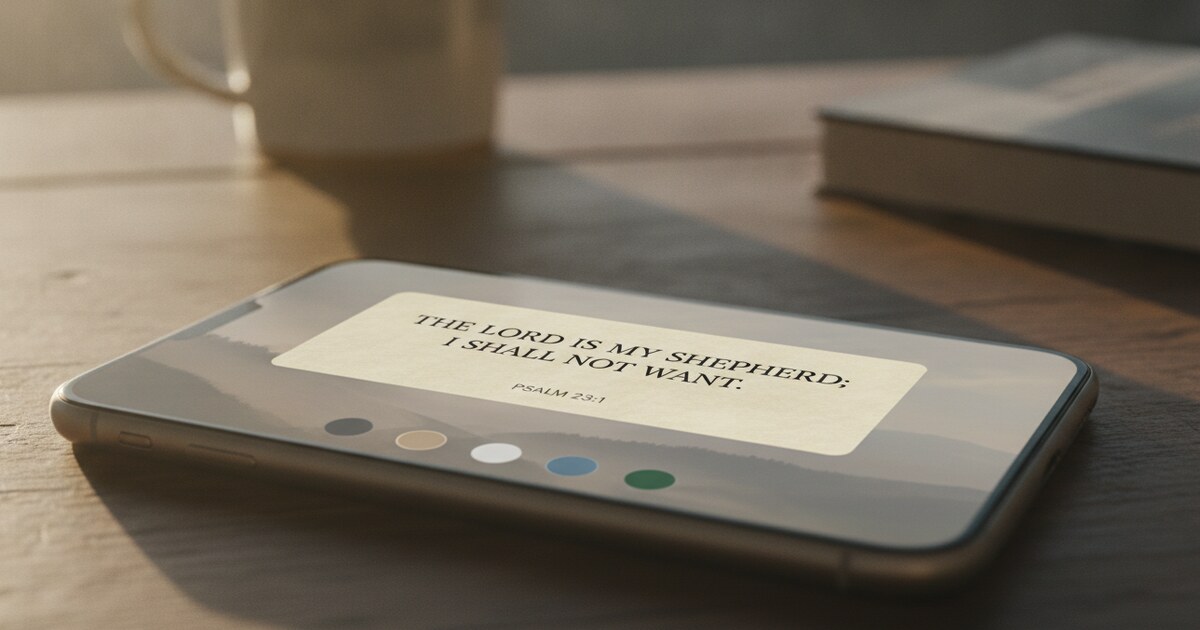
An app like Psalmo turns that pause into a Scripture reading. When you try to open a blocked app, you read a Bible verse from a topic you chose: Faith, Prayer, Peace, and 50+ others. Once you’ve read it, your app opens for the window you set. Then the gate closes again. The urge hits, and instead of just delaying it, you’re redirected toward something that stays with you.
This works as a complement to the environment design above. For a deeper look at the Scripture-first approach, the guide on how to use the Bible to stop phone addiction covers the full framework. If you’re also dealing with the specific anxiety loop around news and social content, how to stop doomscrolling as a Christian addresses that pattern directly. For a broader comparison of apps in this category, Christian apps for phone addiction walks through the main options.
Frequently Asked Questions
Can 3 days without your phone reset your brain? Three days of minimal phone use can reduce cortisol, improve sleep quality, and lower baseline anxiety. These short-term improvements are well-documented. Three days doesn’t rewrite the conditioned habit, though. The automatic urge returns when normal conditions resume unless the environmental changes above are in place. Think of it as a useful reset that shows you how much of your baseline is phone-driven.
How long does it take to break phone addiction? Expect the automatic urge to weaken meaningfully over 8 to 10 weeks of consistent friction. Phillippa Lally’s 2010 UCL research found habit loops solidify over 66 to 254 days. Removing notifications and moving apps starts producing results within days. The deeper conditioned reflex, the automatic reach when bored or stressed, takes closer to 8 to 12 weeks to diminish.
What is the most effective way to stop phone addiction? Environment design outperforms willpower for conditioned behaviors. The most effective combination: remove notification cues, add friction before distracting apps open, replace the scroll reflex with a physical habit, and schedule fixed check-in windows. Adding social accountability, telling someone your goal and checking in weekly, significantly improves the odds of sticking past week 2.
Is phone addiction a real addiction? Phone addiction doesn’t carry a formal DSM-5 diagnosis, but it shares key features with recognized behavioral addictions: escalating use, discomfort when access is removed, and repeated failed attempts to cut back. A 2026 neuroimaging study linked heavy smartphone use to changes in amygdala connectivity related to emotion regulation, suggesting the neurological overlap with recognized addictions goes beyond metaphor.
Psalmo is free to download on iOS and Android. If you want to build a Scripture gate into Step 4, it blocks any app you choose and has you read a Bible passage before it opens. No account required, and the blocking works on the free plan.