

Want a verse on every screen? Psalmo is free.
How to Stop Doomscrolling as a Christian (2026)
Most doomscrolling starts with good intentions. You pick up your phone to check the weather, then a news alert fires, then Instagram surfaces something upsetting, and 30 minutes later you’re carrying a low-level dread you can’t quite name. For Christians, this pattern adds extra weight: you know you should have spent those minutes differently. The guilt rarely breaks the habit, though. It often fuels more scrolling as a numbing response. Stopping doomscrolling as a Christian requires more than resolve. It requires changing what happens in the first 60 seconds your phone is in your hand.
To stop doomscrolling as a Christian, anchor your morning to a daily scripture verse before opening any social app. Use a behavioral gate app like Psalmo to lock Instagram, TikTok, X, or YouTube until today’s verse is read. This puts scripture before the feed without relying on willpower, which APA research shows erodes under repeated low-grade stress.
The goal is putting the right thing first.
Why Doomscrolling Is Especially Hard to Stop as a Christian
Social media feeds are engineered by behavioral designers to maximize time on screen. The core mechanism is variable reward: the same scroll that produces boredom on Monday surfaces something fascinating or infuriating on Tuesday. Your brain can’t predict which, so it keeps pulling down. The American Psychological Association’s 2023 Stress in America report found that 37% of adults who use social media say it increases their anxiety, yet 53% describe checking it more frequently than they intend to. For Christians, a guilt layer compounds the loop. Philippians 4:8 (KJV) instructs setting the mind on things that are “true, honest, just, pure, lovely, of good report.” A doomscrolling session violates that standard directly, which triggers shame, which often drives more avoidance scrolling. Breaking the cycle requires interrupting it at the entry point. Research in the Journal of Behavioral Decision Making (2023) found that people using pre-committed behavioral gates maintained their intended behavior 2.6 times longer than those relying on in-the-moment willpower.
Apps that require a Bible verse before unlocking social apps work because the commitment is made once, in a calm moment, rather than fought anew each morning when the phone is already in your hand. For Christian users, the verse is the actual goal, placed before the feed instead of after whatever mood the feed creates.
What Scripture Says About the Feed
The biblical case for attention management is specific, not general.
Philippians 4:8 (KJV) gives the clearest filter: “Finally, brethren, whatsoever things are true, whatsoever things are honest, whatsoever things are just, whatsoever things are pure, whatsoever things are lovely, whatsoever things are of good report; if there be any virtue, and if there be any praise, think on these things.” Paul describes an active practice, not a passive feeling. Social media algorithms work in the opposite direction, surfacing whatever generates the strongest emotional response because that keeps users on-platform longer.
Proverbs 4:23 (KJV) adds the protective framing: “Keep thy heart with all diligence; for out of it are the issues of life.” The Hebrew word for “keep” is natsar, meaning to guard as a sentinel would. Doomscrolling leaves the gate open and lets the feed walk through first.
Romans 12:2 (KJV) is the most direct application: “And be not conformed to this world: but be ye transformed by the renewing of your mind.” The conforming happens gradually, in 20-minute sessions that slowly calibrate your baseline emotional state toward outrage and anxiety. Renewing your mind starts with what enters it before anything else.
None of these passages condemn social media or staying informed. They establish a sequence: scripture before the feed, every morning, as a practice rather than an aspiration. For a deeper look at how these passages apply to the phone-addiction pattern specifically, the article on how to use the Bible to stop phone addiction walks through the exegesis in detail.
How to Stop Doomscrolling as a Christian: 5 Steps That Actually Work
Step 1: Name the app that owns your morning.
Everyone has one. The app you open before you’re fully awake, the one that decides whether your first few minutes are calm or reactive. For most people it’s Instagram, TikTok, X, or YouTube. Name it specifically. That’s the app where the gate belongs.
Step 2: Set your daily scripture anchor.
Decide in advance: one Bible verse before you open the trigger app, every morning. This is a single decision made in a calm moment, not a daily negotiation at 6:45 a.m. Write it down if it helps. The sequence matters more than the length of the commitment.
Step 3: Move the gate into technology, not willpower.
The most reliable approach is a behavioral gate app that enforces the sequence at the operating system level. Psalmo locks Instagram, TikTok, X, Snapchat, or YouTube through iOS Screen Time or Android Digital Wellbeing until today’s verse is read. The lock sits below the app layer. Read the verse and everything on your list unlocks for the day. For more options in this category, the article on christian app to stop scrolling covers four apps with a comparison of how each gate mechanism works.
Step 4: Keep the verse visible throughout the day.
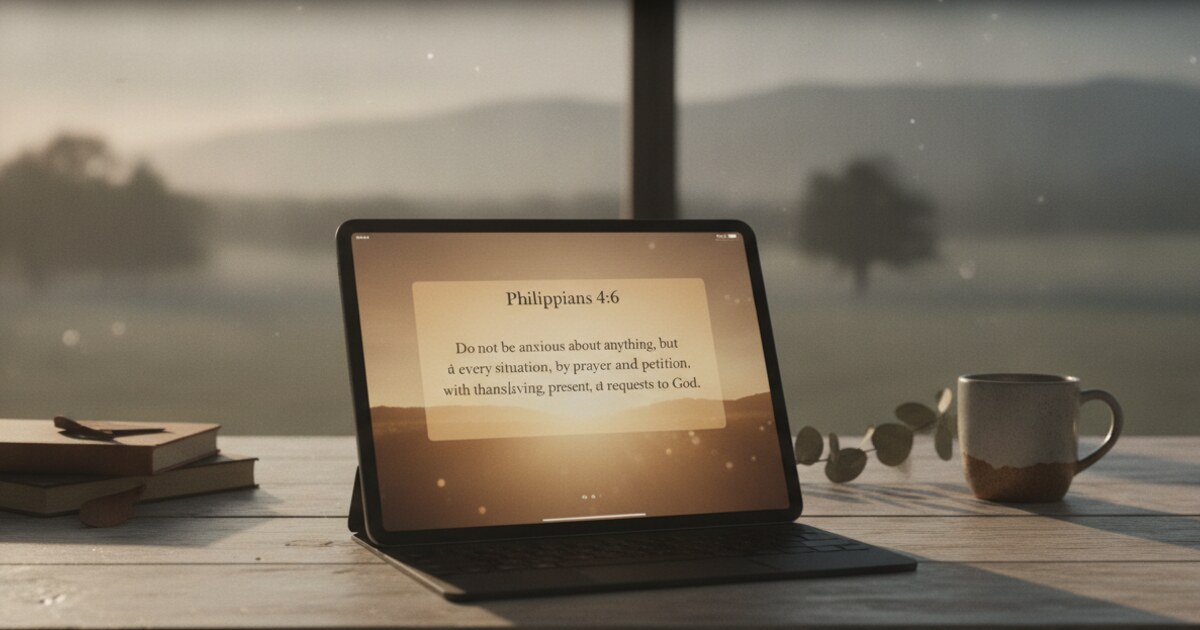
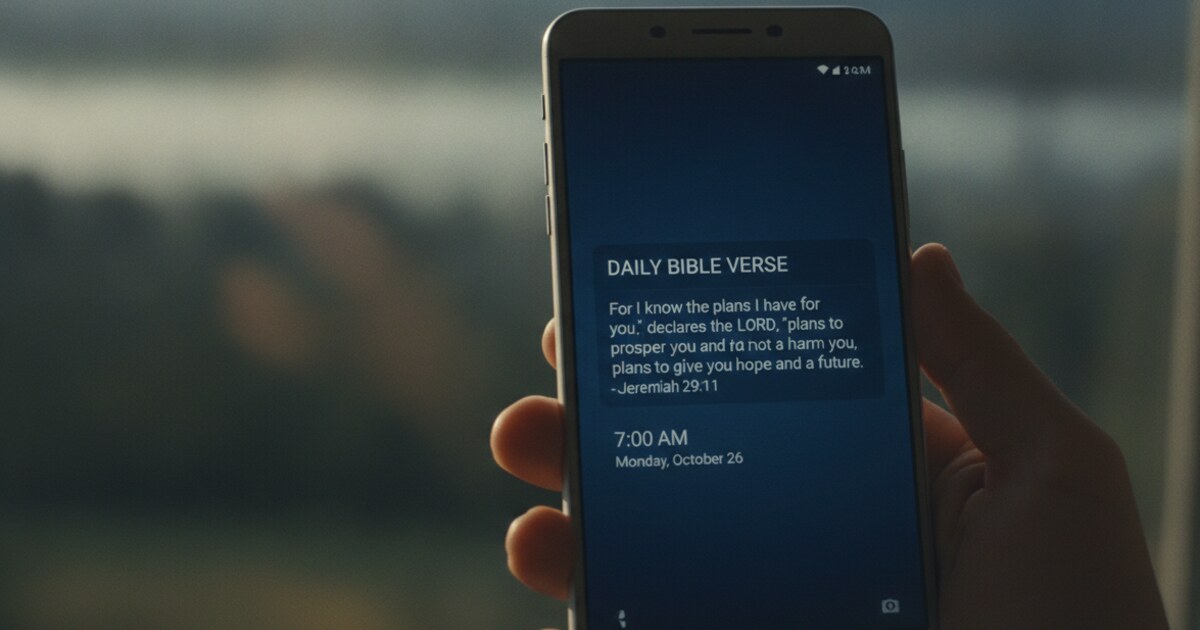
A daily verse widget on your home screen serves as a passive reminder during the hours after the gate lifts. Psalmo’s 15+ verse categories let you filter by topic: Peace & Anxiety, Strength & Courage, Morning Verses, Faith. The verse on your screen reflects the spiritual territory you want to stay in, not just whatever lands in a generic rotation.
Step 5: Measure consistency without shame.
A streak indicator that rewards consecutive days without punishing relapses is more useful than a system that resets with guilt. Doomscrolling habits built over months take weeks to rewire, not days. Consistent progress over 30 days changes the baseline more than any single intense run of discipline.
Why Willpower Fails (and Behavioral Gates Work)
Apple and Google both include built-in screen time tools: Screen Time on iOS, Digital Wellbeing on Android. Both let you set daily limits on apps. Both fail most people for the same reason: they rely on willpower at the exact moment willpower is most depleted. The “One More Minute” prompt in iOS Screen Time appears after 45 minutes of scrolling, when impulse control is at its daily low. Almost everyone taps it.
Behavioral gates shift the decision upstream. You decide, in a calm moment earlier in the day, that the verse comes first. The gate enforces that decision mechanically every morning, without requiring renewed resolve at 6:47 a.m. when the phone is warm in your hand.
Psalmo uses the iOS Screen Time API and Android Digital Wellbeing API to create a hard block. Open Instagram before reading today’s verse and Psalmo prevents the launch. Read the verse and your gate list clears for the day. Setup takes about 4 minutes. For a broader look at how scripture-gate apps compare, the best bible app to reduce screen time covers the options with a full comparison table.
The verse is the point. The gate makes sure it actually happens.
Frequently Asked Questions
Does doomscrolling actually affect your faith, or is it just a bad habit?
Doomscrolling affects faith in measurable ways. It calibrates your emotional baseline toward anxiety and outrage before scripture gets a chance to set the tone for the day. Philippians 4:8 describes a filtering practice that doomscrolling reverses directly, feeding your mind on whatever generates the strongest reaction rather than on what’s true, lovely, or worth praising. Both are habits. The question is which one gets the first 15 minutes of your morning.
How long does it take to break a doomscrolling habit?
Behavioral research points to 21 to 66 days to establish a new habit, depending on frequency and complexity. Morning doomscrolling is a high-frequency habit attached to a physical trigger (picking up the phone), which makes it faster to interrupt than low-frequency patterns. People using a behavioral gate typically report the morning sequence feeling automatic by day 10 to 14. The gate carries the load during the first two weeks.
Are there Bible verses specifically about controlling what you consume?
Yes. Philippians 4:8 (KJV) lists explicit criteria for what to think on. Proverbs 4:23 (KJV) commands guarding the heart with active diligence. Psalm 101:3 (KJV) says “I will set no wicked thing before mine eyes.” Job 31:1 (KJV): “I made a covenant with mine eyes.” All four describe intentional attention management as a spiritual discipline, not optional character development.
Can an app actually help with something as spiritual as doomscrolling?
Attention is both a spiritual discipline and a physical habit, and they operate on the same layer: what enters your mind first each morning. An app that enforces a verse before the feed works at exactly that point. Scripture reading has to happen to function as a morning anchor. The gate makes it happen, which creates the precondition for everything else to follow.
What if I slip and start scrolling again?
Psalmo’s streak tracker rewards consistency without shaming relapses. If you disable the gate or scroll before reading, you know you made that choice consciously. That awareness is different from the reflexive, unnoticed habit that doomscrolling usually is. Disable the gate when you genuinely need to. Re-enable it when you’re ready. The goal is a lasting change in sequence, not a streak unblemished by human imperfection.
If the feed is taking your mornings before scripture gets a turn, Psalmo’s daily verse gate changes that order. Lock the apps that pull hardest, read today’s verse, and the feed is still there when you’re ready for it. Download Psalmo free on the App Store or Google Play.